Understanding your changed consumption pattern is the starting point for managing it. This guide is for people working from Polish apartments full-time or part-time.
A standard household on G11 tariff was historically optimised for evening and weekend use. People left for work in the morning and returned in the evening. Daytime electricity demand in the apartment was low — perhaps a refrigerator cycling on and off, and nothing else.
When you work from home, you add a computer or laptop (typically 30–80W), one or two monitors (15–40W each), a router that was probably already running, and potentially a desk lamp, a printer, and a phone charger. More significantly, you heat the apartment during hours that were previously unheated.
In winter, maintaining a comfortable working temperature during daytime hours adds substantially to your heating bill. In buildings with individual thermostatic control, this is a direct cost. In buildings with heat cost allocators, it affects your relative consumption compared to neighbours who are out during the day.
G12 off-peak hours typically run from 10pm to 6am plus weekend hours. If you work from home during the day, most of your work-related electricity use falls in the peak G12 window — which may make G11 more suitable for your current pattern.
Laptops consume significantly less power than desktop computers. If you use a desktop, an energy monitor plug (available in hardware shops) lets you measure actual consumption rather than estimating from label wattage.
Heating only the room where you work, rather than the entire apartment, is more practical when you have thermostatic radiator valves. Close doors between the work room and other spaces to concentrate the heat where it is needed.
An energy performance certificate (świadectwo charakterystyki energetycznej) is a document that describes how much energy a building is calculated to need per square metre of floor area per year. It is expressed in kWh/(m²·year) and categorised from class A+ (most efficient) to class G (least efficient).
In Poland, certificates are required by law when a property is sold or rented. The obligation arises from the EU Energy Performance of Buildings Directive, implemented through Polish building law (Prawo budowlane). Since April 2023, the obligation to present the certificate has been more strictly enforced, with the requirement to hand over a copy to the buyer or tenant.
The Central Register of Energy Performance Certificates (CREP) is maintained by the Ministry of Development and Technology. You can search the register at rzgdik.gunb.gov.pl. You will need the address of the building or the unique certificate number.
Certificates are issued by authorised auditors (audytorzy energetyczni). The list of persons authorised to issue certificates is maintained in a public register also held by the Ministry.
If your certificate has not been issued or you cannot find it in the register, a building administrator or property manager may have a copy. For newer buildings, the developer is required to provide the certificate at handover.
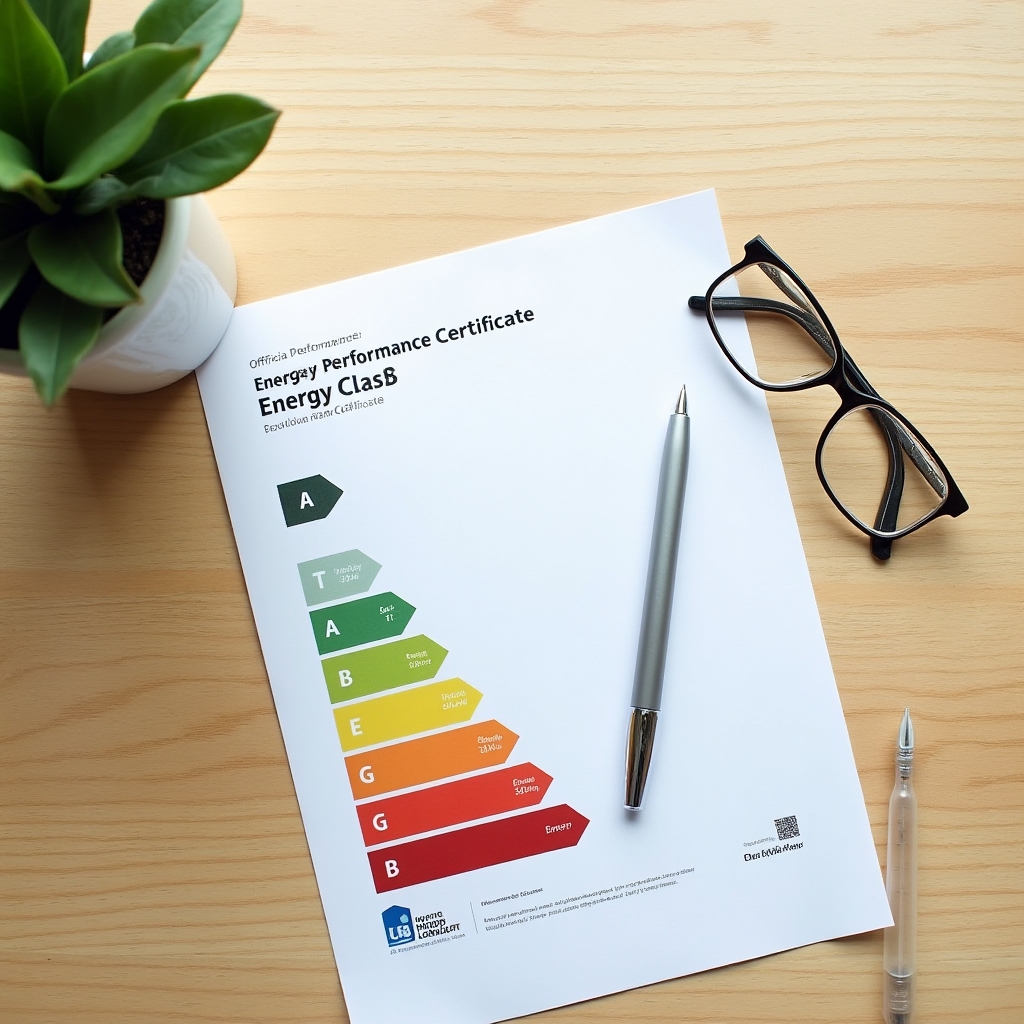
A class A or A+ building uses very little primary energy. Class C or D represents average Polish housing stock. Class F or G indicates high energy consumption — older buildings without insulation, single-glazed windows, and inefficient heating systems typically fall here.
As a remote worker, the certificate class of your apartment is relevant because it describes the building's heat retention properties. A class F apartment in a 1970s blok will be significantly harder to heat in winter than a class B apartment in a recently renovated building, even if the floor areas are identical.
This does not mean lower-class buildings cannot be improved. Draught-proofing, radiator optimisation, and smart thermostat use can make a practical difference to your comfort and costs even in an older building, without requiring any structural changes.
Smart meters (liczniki inteligentne) are being rolled out across Poland as part of the AMI (Advanced Metering Infrastructure) programme. If your building has been upgraded, you may be able to access hourly or half-hourly consumption data through your supplier's online portal.
This data is valuable for remote workers. You can see exactly how much electricity your home office draws during working hours compared to evenings and weekends. This makes the G11 vs G12 comparison concrete rather than theoretical.
If you do not yet have a smart meter, a plug-in energy monitor for your desk setup gives a useful partial picture. They are inexpensive and available in most electronics retailers.
Browse our seasonal guides or get in touch directly.
